
Compassionate, expert help for your cat’s behavior issues.
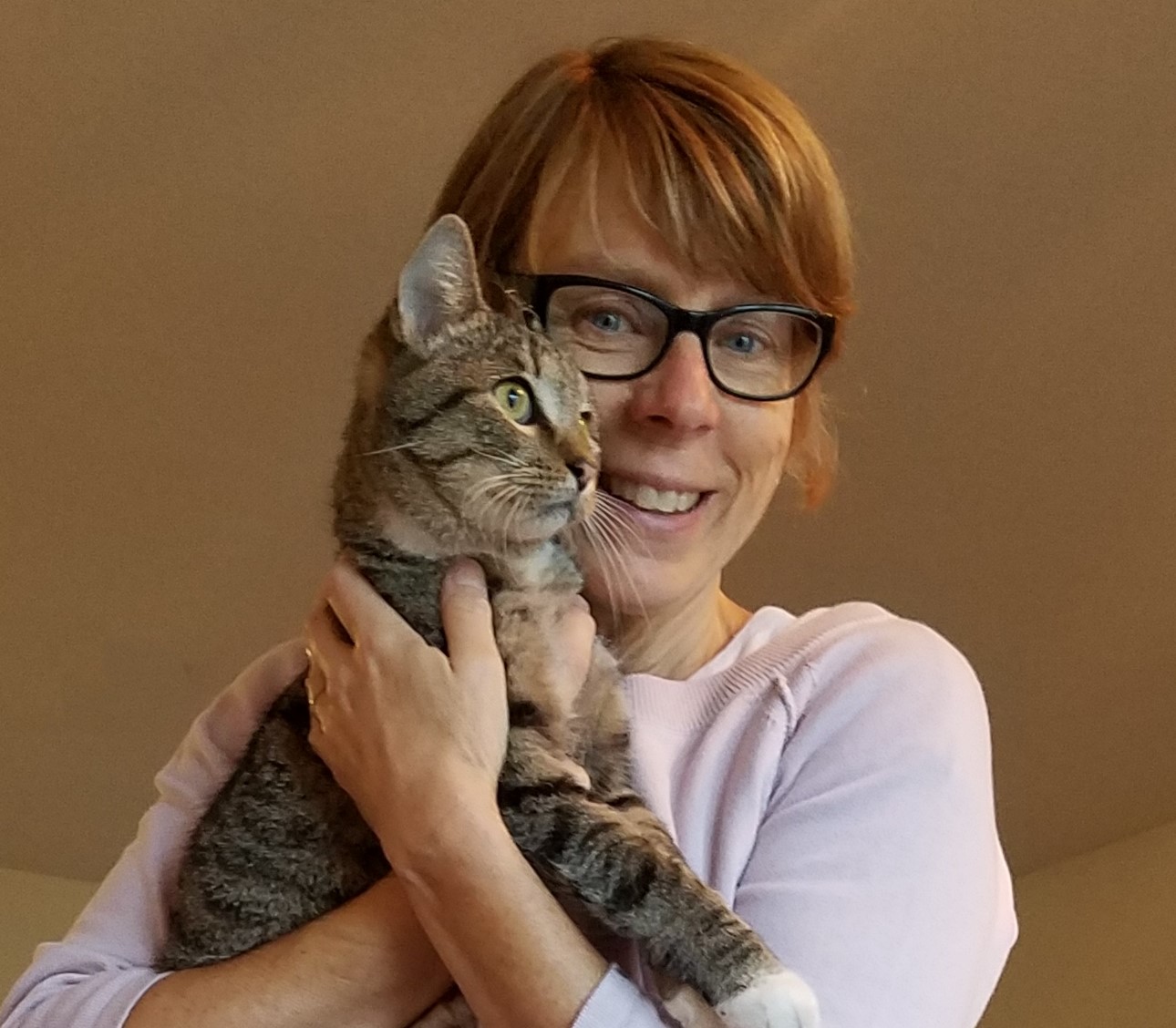
Kate is certified as a cat behavior consultant through the International Association of Animal Behavior Consultants and is a Fear Free certified animal trainer. She has been working with animals for more than 40 years. She devoted her young adult years to training horses, teaching horseback riding lessons, and managing a riding stable. She worked as a veterinary assistant while pursuing a bachelor’s degree in English and philosophy at the University of Illinois and returned to work as a riding instructor while earning a master’s degree in English literature at The Pennsylvania State University.
Before pursuing formal training as a cat behavior consultant, Kate spent almost 20 years teaching academic writing to undergraduates. During that time, she fostered animals for various shelters and rescues. Kate has dedicated her life to animal rescue and is especially focused on saving the most at-risk cats and kittens, those who come to shelters and rescues with health and behavioral issues that make it a challenge to get them adopted.
As a certified cat behavior consultant and foster caretaker, Kate works with cats and kittens who have litterbox issues, are under socialized, shy, fearful, and aggressive to humans and other animals. By using positive reinforcement and environmental modification, Kate helps these animals learn to trust and live happily with humans; by educating clients and adopters, she helps cat guardians provide an environment where these deserving animals can express natural behaviors and be well-adjusted, loving feline family members. Kate has volunteered with many shelters and rescues, including a six-month stint at the Tierschutzverein Tirol Animal Shelter in Innsbruck, Austria. She is currently on the board of Frederick Friends of Our County Animal Shelter and co-directs their foster cat program.
Successfully resolving behavior problems requires trust between you and your cat. That is why Kate uses only positive reinforcement methods and environmental enrichment to help you change your cat’s behavior. This approach involves the use of rewards–such as treats, affection, and playtime–to teach and reinforce desired behaviors, and changes to your cat’s environment to allow for the appropriate expression of natural behaviors. You’ll find that these methods don’t only resolve problem behaviors, they also help strengthen the bond between you and your cat. Punishment is never a part of a Healthy Cattitude behavior modification plan, as it is ineffective and damages your relationship with your cat.